


If your curls went flat, frizzy, clumped, or the nape turned into a mess, you’re not alone. This guide explains how to restore curls in a synthetic wig with low-risk reset methods, the right setting time, and aftercare that keeps curls defined between wears.
Signs your synthetic wig curls need a reset (not just a quick refresh)
Synthetic curls don’t “heal” like human hair does—they hold shape based on how the fiber is set. When the shape collapses, it’s time for a reset, not more product.
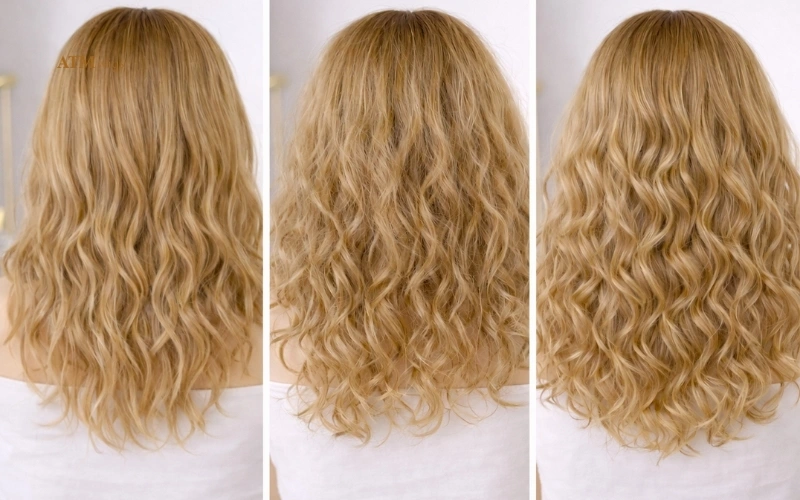
- Curls went flat or stretched out: Your curls look longer, limp, and less bouncy, especially at the ends. The wig may still look “clean,” but the curl pattern has lost structure.
- Frizzy halo or fuzzy ends: You see a dry, puffy halo around curl clumps, or the ends look rough no matter how gently you finger-comb. This is often friction + dry handling, not “damage” you can condition away.
- Curls are clumping or feel crunchy: When sections of curls stick together, feel rigid, and/or look like strings of hair, usually, this is from excess buildup/residue left by styling products, from a hard-water buildup, or you didn’t rinse your hair properly after washing.
- Uneven curl pattern (one side tighter than the other): One side bounces and the other looks tired. This can happen from sleeping on one side, seatbelt friction, or storing the wig slightly crushed.
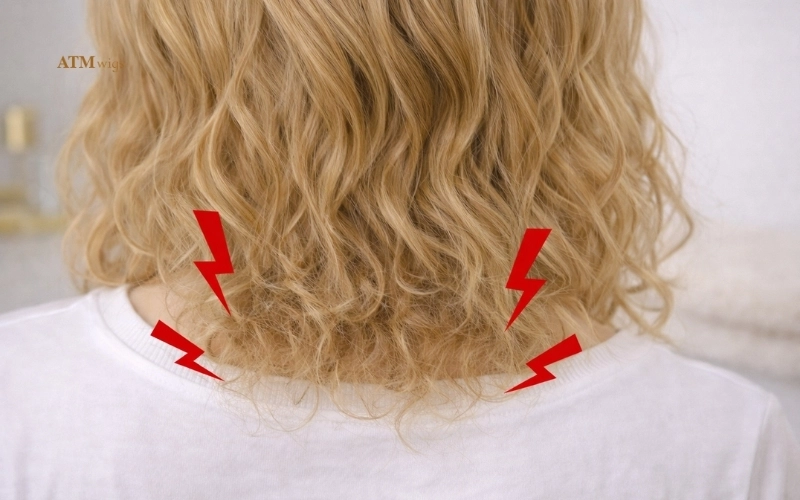
- Nape messy: tangles, matting, and “bird nest” curl. The nape is the highest-friction zone (collars, scarves, shoulder rub). When it tangles, curl memory collapses quickly and the area looks frizzy and uneven.
What causes curls to drop in synthetic wigs
Knowing the cause helps you choose the right reset method and avoid repeating the same cycle.
Friction is the #1 curl killer
Collars, hoodie strings, scarves, and even long hair rubbing your back can rough up fibers. That creates tangles and fuzz, especially at the nape and ends.
Storage compression flattens curl shape
If curls are pressed under a net too tightly or packed into a small bag, they stretch and lose definition. Synthetic fibers “remember” the crushed position.
Washing mistakes create frizz and clumping
Hot water, scrubbing, twisting, or rubbing with a rough towel can disturb the fiber surface. Even with gentle washing, leftover cleanser or product film can make curls stiff.
Dry handling and brushing can explode frizz
Brushing curls dry often turns defined curl clumps into a puffy cloud. For many synthetic fibers, once you create that halo frizz, it’s hard to smooth without re-setting.
Tangling (especially at the nape) breaks the curl pattern
Tangles force you to pull and over-comb. That mechanical stress roughens fibers and makes curls look uneven and “stuck.”
Prep: detangle the right way (so you don’t blow up frizz)
A good reset starts with gentle prep. If you rush detangling, you’ll lock frizz into the set.
Finger detangle first, then use a wide-tooth comb
Put the wig on a stand and work in small sections. Use your fingers to loosen knots, then follow with a wide-tooth comb.
Start at the ends and move upward. Hold the hair close to the cap with your other hand so you don’t tug on wefts or stretch the fiber.
When you should wash before resetting curls
Wash first if your curls are clumping, crunchy, sticky, or dull. Residue is a common reason curls won’t separate cleanly after a set.
If the wig is clean and simply flattened, you can often skip washing and go straight to a heatless set. Less water can mean fewer tangles.
If you do wash: the rinse rule matters most
Use cool to lukewarm water and a mild cleanser diluted in a bath. Swish gently and avoid rubbing or wringing.
Rinse longer than feels necessary. A slow, thorough rinse prevents that stiff “product film” that causes clumping and stringy curls.
Towel rule: press, don’t rub
Use a microfiber towel and gently press out water. Rubbing creates friction, which creates frizz—exactly what you’re trying to fix.

Heatless curl reset methods (safest first)
If your goal is to restore the curl pattern with the lowest risk, start here. Heatless methods can still create beautiful, defined curls when you let them set fully.
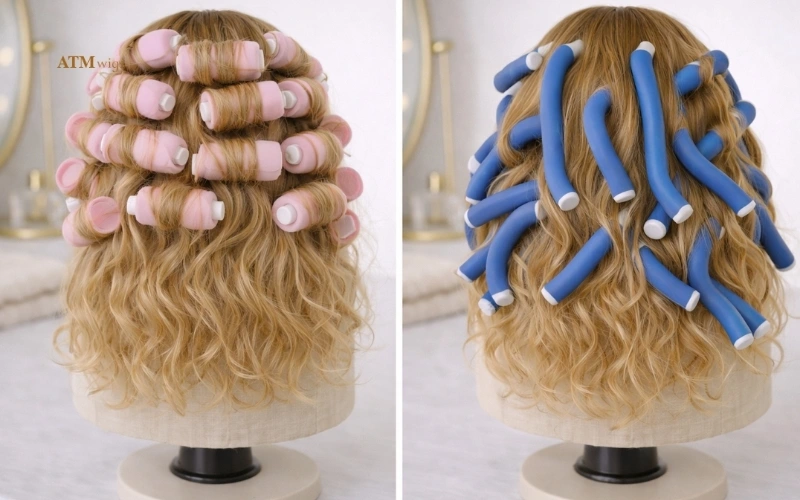
Rollers or flexi rods + air-dry set (best all-around heatless reset)
This method works for most synthetic wigs because it shapes curls without direct heat tools.
Section the hair evenly and wrap each section around rollers or flexi rods. Keep tension firm but not tight—tight wrapping can stretch fiber and create fuzz at the bend.
Secure ends smoothly so they don’t kink. If ends flip out, it’s often because they weren’t tucked cleanly on the roller.
Let the wig air dry completely on the rollers. This is where patience pays off, because synthetic curls look best when the set is fully dry and fully cooled.
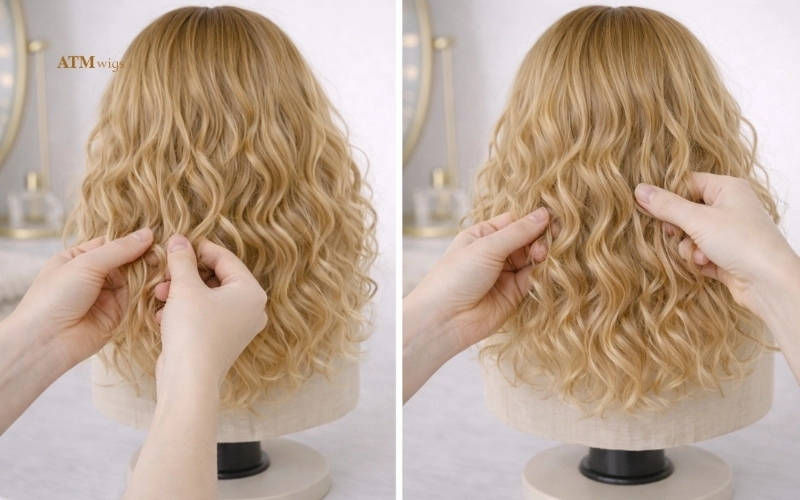
When you remove rollers, separate with fingers only. If you want more volume, lift at the roots with your fingertips instead of brushing through curls.
Pin curls for face-framing pieces and stubborn ends
Pin curls are great when the front pieces look tired or the ends refuse to behave. Use smaller sections for cleaner definition.
Lightly dampen the section, coil it into a pin curl, and secure. Let it dry fully before releasing, then separate gently with fingers.
Braid or twist set for soft waves and “wearable” texture
If your curls are too far gone or you want a quick low-risk reset, braids and twists create soft, natural waves.
Lightly dampen the hair and braid or twist in multiple sections. More sections create more texture; fewer sections create bigger waves.
Let it dry completely before unbraiding. If you release early, the pattern collapses and you’ll think the method “didn’t work.”
How to separate curls after a heatless set (without frizz)
Start by shaking the wig gently at the cap to loosen curls. Then separate curl clumps lightly with fingertips.
Avoid combing through the curl pattern. If you must detangle, do it only at the very ends and stop as soon as curls look smooth.
Optional: low-risk warm steam reset (safety principles only)
Steam can help “encourage” a set, but it can also create frizz if done aggressively. If you use steam, keep it minimal and controlled.
The safe-steam principles
Use steam from a distance and keep it moving. Never press a steamer directly onto the hair, and never hover over one spot.
Steam is about gentle warmth, not blasting the fiber. If you see sudden shine, stop and let everything cool.
Cool-down is part of the method
After any warm steam exposure, the wig must cool fully before you touch or separate curls. Warm curls are flexible and will drop if handled too soon.
Stop signs that mean “do not continue”
Plastic smell, sticky feel, or harsh shine are red flags. Let the wig cool and switch to a heatless approach.
Drying and setting time: how to know it’s fully set
This is where most curl resets fail. People remove rollers too early, then blame the wig.
The “fully set” rule
A curl is fully set when it is completely dry and cool to the touch. If it feels even slightly damp or warm, it’s not locked in.
What affects air-dry and setting time
Dense wigs, longer lengths, and humid environments take longer. If your wig is thick, plan more time than you think you need.
Airflow helps. A wig stand in a ventilated room is better than leaving the wig flat on a table, where moisture gets trapped.

Don’t remove rollers early
If you remove rollers while the hair is still damp, curls stretch out and look flat within minutes. Waiting is the difference between “okay” and “wow.”
How to refresh between wears without doing a full reset
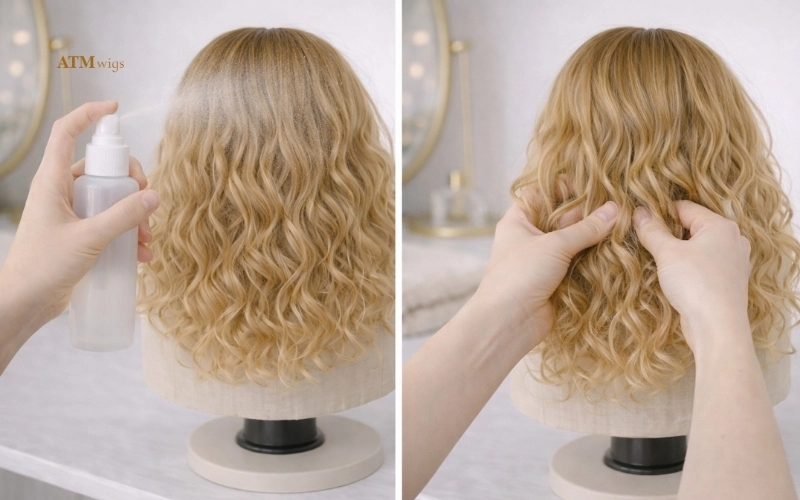
For day-to-day touch-ups, a light mist and gentle scrunching can restore shape. Keep it minimal so you don’t create buildup.
Aftercare: keep curls defined longer
Once you restore curls, the goal is to protect the pattern from friction and rough handling.
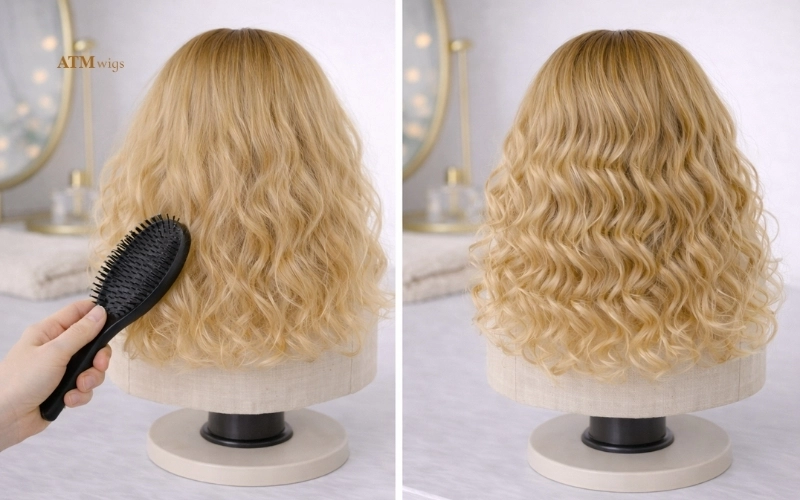
No brushing dry curls
Use fingers to separate and shape. If you need to detangle, do it in small sections at the ends, then stop.
If you want a smoother finish, use your palms to lightly smooth the outside layer of curls rather than combing through the pattern.
Refresh routine that won’t cause buildup
Use a light mist (water or a wig-safe curl refresher) and scrunch. A small amount of wig-safe mousse can help define curl clumps.
Avoid layering product repeatedly. Product buildup is one of the fastest ways to get clumping, crunch, and stringy curls.
Anti-frizz and anti-static, used lightly
A light anti-static spray can reduce flyaways and friction. Use it sparingly and focus on the outer layer and ends.
Heavy oils and thick creams often weigh down curls and attract tangles, especially at the nape.
Storage that protects curl shape
Store on a wig stand so curls hang freely. If you use a hair net, make sure it’s not compressing the curls tightly.
For travel, use a roomy bag or box. Tight packing crushes curls and leads to uneven curl patterns.

Common mistakes that ruin curl pattern
These are the most common reasons synthetic curls go from cute to chaotic.
- Brushing through curls = “frizz explosion”: Brushing breaks curl clumps apart and creates a puffy halo. Once that halo forms, your best fix is usually a reset, not more product.
- Product buildup causes clumping and stiffness: Too much hairspray, mousse, or leave-in creates film. That film makes curls stick together, look stringy, and tangle faster.
- Rough towel drying creates friction frizz: Rubbing with a regular towel roughens fibers. Always press gently with microfiber instead.
- Tight storage crushes the set: Curls lose shape when compressed. Give curls space to sit in their natural pattern.
- Overdoing warmth or steam: Too much heat can create shine or fuzz that doesn’t go away. When in doubt, choose heatless methods and add time, not temperature.
FAQs about how to restore curls in a synthetic wig
How do you restore curls in a synthetic wig after washing?
After washing, gently press out water with a microfiber towel, detangle ends-to-roots, then set the hair on rollers or flexi rods. Let it air dry fully and cool completely before removing and separating curls.
Can you restore curls without heat?
Yes. The curl pattern of your hair can also be restored using heatless methods such as using rollers or flexi-rods and allowing for the full drying time in the air, making pin curls, or using braids to set the curls.
Why do synthetic wig curls get frizzy at the nape?
The nape rubs against collars and shoulders all day, creating friction and tangles. That friction roughens fibers and breaks curl clumps apart, so the area looks messy faster.
How do you refresh curls between wears?
By using a light mist to hydrate the hair and scrunching very gently, you can revive the bounce in your curls; separate the clumps of curls only with your fingers and never with a brush; and keep the use of a product to a minimum so that excess moisture does not create buildup in the hair or cause the curls to clump up together when drying.
With the right prep, full setting time, and gentle aftercare, how to restore curls in a synthetic wig becomes a simple routine—not a gamble. If you’re also exploring premium wig solutions for your collection, browse ATM Wigs to explore our services and catalog for high-quality hair options designed to look natural and wear beautifully.

