


Can you use heat on a synthetic wig and still keep it looking smooth, natural, and wearable? The short answer: sometimes—if the fiber used in your wig is heat-friendly, and you follow a few simple rules. This guide shows how to check your wig, choose safer tools, and style without melting or frizzing the fibers.
Quick answer: yes—but only under the right conditions
You can use heat on a synthetic wig only if it’s labeled heat-friendly (heat-resistant) and you stay within the manufacturer’s temperature range. Standard synthetic wigs are not designed for direct heat tools and can melt, kink, or turn stiff fast.
If you don’t know what fiber you have, treat it as regular synthetic until you confirm otherwise. One wrong pass with a flat iron can permanently change the texture.
Two types of synthetic wigs: regular vs heat-friendly
Regular synthetic fiber is made to hold its style “as-is.” It’s great for low-maintenance wear, but direct heat can cause frizz, shiny patches, and melted ends.
Heat-friendly synthetic fiber is engineered to tolerate limited heat. That said, it still isn’t human hair—too much heat or too many passes can flatten curl pattern and create roughness.
What “heat-friendly” really means
Heat-friendly doesn’t mean “safe at any temperature.” It usually means low heat, light contact, fewer passes, and extra cooling time so the style can set.
Also, heat can change a wig’s “fiber memory.” A curly heat-friendly wig can lose bounce if you over-straighten it.

How to tell if your synthetic wig can handle heat
Before you reach for a curling iron or flat iron, confirm what you’re working with. This step prevents 90% of heat-related damage.
Check the label, product page, or brand instructions
Look for terms like heat-friendly, heat-resistant, heat safe, or a specific temperature limit (often listed in °F/°C). If you purchased from a salon or retailer, ask for the fiber spec.
If no heat guidance exists, don’t guess. Assume it’s not heat-safe.
Don’t rely on shine or softness as “proof”
Some regular synthetic wigs feel silky and look low-shine, especially newer premium fibers. That doesn’t automatically mean they can tolerate heat tools.
The only reliable signal is the manufacturer’s label or instructions.
Do a strand test (the right way)
Pick a hidden section at the nape/underlayer. Detangle it, then apply the gentlest heat method you plan to use.
Start at the lowest setting and use minimal contact time. If the hair shrinks, goes crispy, smells like plastic, or frizzes instantly, stop—your wig is not heat-safe.

Heat tools: what’s safer, what’s risky, what’s a no-go
Different tools deliver heat in different ways. For synthetic fibers, how heat is applied matters as much as the number on the dial.
Flat iron, curling iron, hot comb (highest risk)
Direct-contact tools can work on heat-friendly synthetic wigs when used carefully. But for standard synthetic fibers, they’re the fastest route to melting or stiff patches.
Even on heat-friendly fiber, high pressure and repeated passes can cause roughness and permanent texture shift.
Hair dryer (moderate risk, can be safer)
A blow dryer can be safer than an iron because you can control distance and airflow. But concentrated heat in one spot can still warp fibers, especially near the ends.
Use a low heat setting and keep the airflow moving. Never “cook” one section to force it straight.
Steam and hot water methods (popular for synthetics)
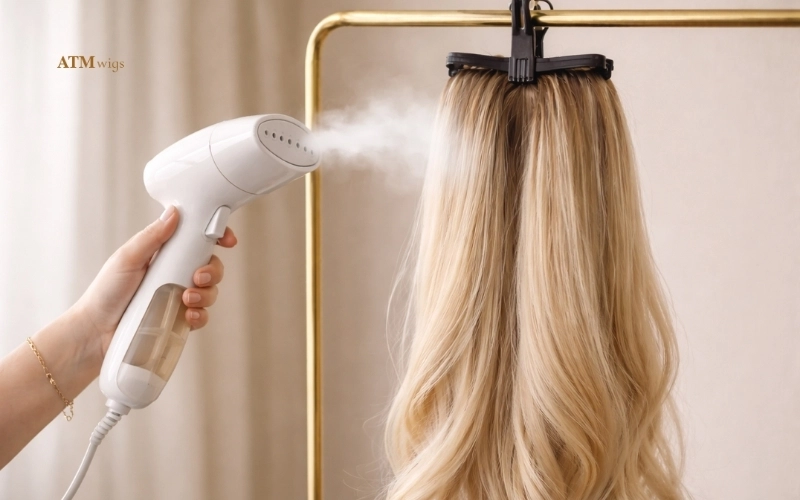
Steam styling is a common approach because it reduces harsh, direct contact. It can help relax frizz and reshape fiber—especially for straightening or smoothing.
Hot water setting is also used for curls and resets, but it must be controlled. Boiling water or soaking the cap can distort the shape or damage the construction.

The safest way to heat-style a synthetic wig (step-by-step)
If your wig is heat-friendly and you’ve confirmed the temperature limit, use this method to lower the chance of frizz, melt, or stiffness.
Prep: detangle, section, and protect the cap
Place the wig on a secure wig stand so you can work evenly. Detangle gently from ends to roots using a wide-tooth comb or wig brush suited to the texture.
Create clean sections with clips. Keep heat away from lace, knots, and cap seams—synthetic caps and lace can warp under heat exposure.
Choose low heat and reduce contact time
Use the lowest effective heat setting and follow the brand’s max temperature if provided. On synthetics, slow and gentle wins more than “hot and fast.”
Plan for fewer passes. If you need multiple passes to get results, your heat level is likely too high or your technique needs adjustment.
Curling method: shape first, heat second
For the safest curl, create the shape with rollers or pin curls first. Then apply controlled warmth (only if the fiber is heat-friendly) to set the curl.
Hold each curl in place and let it cool fully. Cooling time is what “locks in” the style for synthetic fibers.
Straightening method: tension + light passes
Work in small sections. Use gentle tension to guide fibers straight rather than pressing hard with the iron.
If you’re using a dryer, keep it moving and use a brush to smooth. If you’re using an iron on heat-friendly fiber, keep contact brief and avoid repeating passes.
Finishing: cool down before combing
Let the wig cool completely before brushing or combing. Brushing too soon can stretch fibers and create frizz.
Use a light finishing product only if needed. Heavy oils can attract dirt and cause buildup that makes tangling worse.
What to avoid: common mistakes that melt or frizz synthetic fibers
Most synthetic wig damage isn’t from “a little heat.” It’s from heat plus the wrong habits.
Mistake 1: treating synthetic like human hair
Synthetic fiber behaves differently than keratin hair. It doesn’t “bounce back” from overheating. Once it melts, kinks, or gets crispy, that change can be permanent.
If you want frequent styling freedom, synthetic may not be the right fiber for your routine.
Mistake 2: high heat to “fix it faster”
High heat can create shiny patches, stiff ends, and uneven texture. Even heat-friendly fibers can lose their intended finish if overheated.
Start low, go slow, and stop the moment you see negative signs.
Mistake 3: heating near lace or the cap
Lace fronts, monofilament areas, and cap seams can warp with heat exposure. Keep tools away from the base and focus on the mid-lengths to ends when smoothing or setting style.
Mistake 4: styling over product buildup
Hairspray residue, heavy serums, and sticky styling products can cook onto fibers. That leads to tangling, dullness, and patchy texture.
If your wig feels coated, clean it before heat styling.

If you already damaged the wig with heat: what helps (and what won’t)
Heat damage can look like frizz, crunchy ends, or sections that feel “stuck.” The fix depends on how severe it is.
Identify the damage type first
- Mild frizz/static often improves with gentle detangling, controlled steam, and proper storage.
- Kinked or crimped sections may need a reset method.
- Melted ends or stiff patches are usually not fully reversible.
If the fiber feels hard and shiny in one area, it’s often melted—not just dry.
Fixes that can improve appearance
For mild-to-moderate frizz, use a low-risk approach: detangle carefully, then try controlled steam at a safe distance to relax the surface texture.
Trimming can also help. Synthetic fiber doesn’t “heal,” so removing damaged ends can restore a cleaner silhouette.
When replacement is the best call
If large sections are melted, or if the cap/lace has warped, a full repair may not be realistic. Replacing the wig can save time and give a more natural finish overall.
Heat vs no-heat styling: smart alternatives
If your wig is regular synthetic—or you want the safest routine—no-heat styling is the move.
No-heat curl options
Rollers, flex rods, and pin curls can reshape a wig without risky direct heat. The key is setting time and letting the wig cool and rest.
For many wearers, these methods give a softer, more natural curl pattern than an iron.
Smoothing and reducing shine without heat overload
Shine control and finish matter a lot for realism. Instead of blasting heat, focus on gentle surface techniques and proper detangling.
A clean wig with minimal buildup usually looks more “real” than one overloaded with products.
When human hair is the better choice
If you plan to curl, straighten, or blow dry often, human hair wigs and toppers offer more flexibility and a more predictable result.
Synthetic is great for ready-to-wear styles, but heat styling is where it has limits.

Care after heat styling (so it doesn’t tangle and puff up)
A synthetic wig can look amazing after styling—but it needs the right aftercare to stay smooth.
Post-style routine
Let the wig cool fully, then gently comb. Avoid aggressive brushing at the nape, where friction causes tangling.
Store the wig on a stand or in a protective bag to preserve shape and reduce frizz.
Wash frequency and residue control
Styling sprays can create buildup that attracts dust and increases tangling. Clean the wig when it starts to feel coated or looks dull.
Use a light refresh and gentle detangling in between washes to help keep the finished look of your wig without overworking the fiber.

FAQs about Can you use heat on a synthetic wig?
Can you use a curling iron on a synthetic wig?
Only if it’s heat-friendly and you stay within the brand’s temperature limit. Regular synthetic can melt or frizz from direct iron contact.
Can you straighten a synthetic wig with a flat iron?
Heat-friendly fibers may tolerate low heat and minimal passes. For regular synthetic, use safer alternatives like controlled steam or no-heat smoothing.
How do I know if my synthetic wig is heat-friendly?
Check the label, product listing, or manufacturer guidance. If there’s no clear heat rating, assume it’s not heat safe and do a strand test.
What happens if you use heat on a regular synthetic wig?
You can get melted ends, stiff patches, shiny “fried” sections, and permanent texture damage—often after just one high-heat pass.
Can you use a hair dryer on a synthetic wig?
A dryer can be safer than an iron if used on low heat with movement and distance. Concentrated heat in one spot is still risky.
Is steam safer than a flat iron for synthetic hair?
Steam is often safer because it reduces direct contact, but it still needs control. Too much heat or too close exposure can distort fibers or the cap.
Can you use hot water to curl a synthetic wig?
Some people use hot water setting methods, but you must avoid boiling water and protect the cap. Results vary by fiber type and construction.
Can you use heat on a synthetic lace front wig?
You can style the hair (if heat-friendly), but avoid heating the lace, knots, and cap. Heat near the base can warp the lace or distort the fit.
How do you fix frizzy synthetic hair after heat damage?
To help fix frizzies due to heat, try gently detangling with controlled steam for mild frizzy hair. Melted or crunchy sections often need trimming or replacement.
How often can you heat-style a heat-friendly synthetic wig?
As little as possible. Frequent heat styling shortens lifespan, increases frizz, and can permanently alter the fiber’s original texture.
Do you need a heat protectant on synthetic hair?
Many heat protectants are formulated for human hair and can cause buildup on synthetics. Use only products recommended for synthetic fibers.
What’s the safest way to curl a synthetic wig without heat?
Rollers or flex-rods can be used to curl synthetic wigs as long as provide soaking time and cool completely before removing the curlers. This will help maintain the integrity of the fiber and decrease the chances of melting.
Can you use heat on a synthetic wig? Yes—when it’s heat-friendly and you follow a low-heat, low-contact routine that protects the fibers and the cap. If you want long-lasting realism and more styling flexibility, explore ATM Wigs’ catalog and services to find the right wig fiber and construction for your routine.

