


Learning how to make a silk top wig helps you understand why this construction is valued for its natural scalp effect, clean parting, and premium finish. This guide explains the professional process behind silk-layer construction, knot concealment, and key quality checkpoints.
What makes a wig a “silk top”?
A silk top wig is defined by its layered top construction. Instead of leaving knots visible on the surface, the hair is ventilated through a base layer and then passed through a silk or silk-like top layer.
This creates the illusion that each strand is growing directly from the scalp. The result is a smooth, realistic parting area that looks refined in everyday wear and close-up viewing.
For readers new to this construction, it is helpful to first understand what is a silk top wig before comparing it with lace, monofilament, or other cap designs.
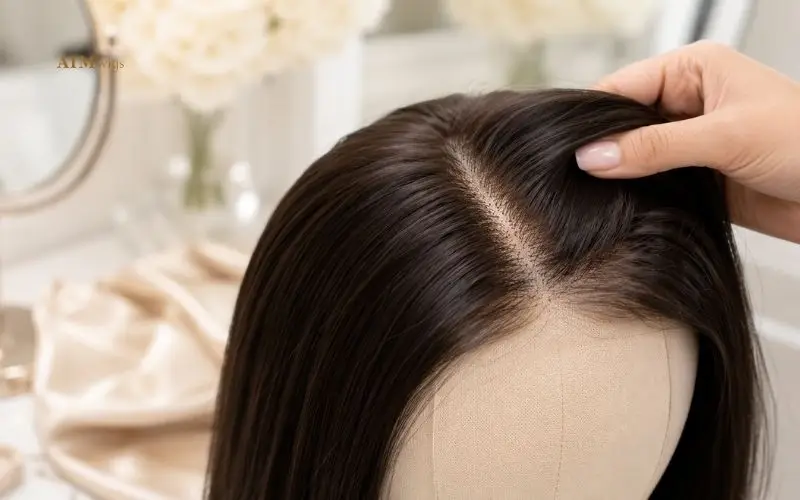
Materials used in a silk top wig
A professional silk top wig starts with carefully selected materials. The final result depends not only on the hair but also on the structure of the cap, the quality of the silk layer, and the way each section is reinforced.
The main materials usually include human hair, a silk or silk-like top layer, a lower base layer, lace or monofilament support, thread, wig clips, adjustable straps, and a cap foundation.
The silk top area often sits behind a lace front. This allows the wig to have a soft, natural hairline while the silk section creates a scalp-like effect through the crown and parting area.
Silk layers
The visible silk layer is what gives the wig its smooth scalp appearance. Its color should be close to the wearer’s scalp tone, especially for consumers in Europe and the US who may need lighter beige, neutral, or soft pink undertones.
If the silk layer is too thick, too yellow, or too pale, the parting area may look less natural. A high-quality silk layer should look clean, flat, and realistic under natural lighting.
Base layer
The base layer sits underneath the silk and holds the ventilated knots. Hair is tied into this layer first, then guided through the silk layer above.
This hidden structure is what separates a silk top wig from a standard lace top. The base must be stable enough to hold the knots but fine enough to avoid adding too much bulk.
Reinforcement areas
Reinforcement may be added around the crown, parting area, edge of the silk top, and cap connection points. This helps the wig maintain shape and durability during wear.
In a well-constructed wig, there will be no stiffness or gross weight to the reinforcement, only support for the cap with the added benefit of the top staying comfortable, flexible, and looking natural.
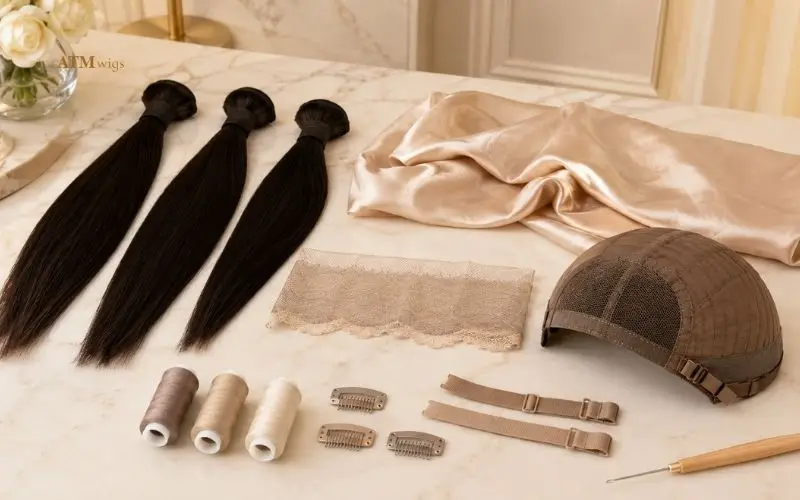
How the silk top is built
The construction of a silk top wig is usually done in stages. Each stage affects how realistic, comfortable, and durable the final wig will be.
Unlike a simple wefted wig, a silk top wig requires more precision because the top area must be layered, ventilated, aligned, and finished carefully.
Step 1: build the cap foundation
The construction of the wig cap will begin first, and the foundation of the wig cap is done in many different ways based on the type of wig (e.g., lace, monofilament, wefted, stretch, PU, or hand-tied) and the style of the wig.
For many silk top wigs, the front hairline is made with lace, while the silk top is placed slightly behind it. This combination gives a natural front appearance and a realistic scalp effect in the parting area.
The cap foundation must be balanced. If it is too loose, the wig may shift. If it is too tight or heavy, it can feel uncomfortable during daily wear.
Step 2: prepare the silk top area
After the cap structure is prepared, the silk top section is marked and shaped. The size of this area depends on the intended parting flexibility.
A smaller silk top may support a fixed center or side part. A larger silk top allows more styling freedom and a more flexible parting area.
The silk top must be positioned carefully. If it sits too far forward, it may interfere with the lace front. If it sits too far back, the parting may look less natural.
Step 3: ventilate the hair into the base
Ventilating the Hair to the Base: Ventilating refers to the manual method of tying hair into the fleece base. Small pieces are tied into the base with a ventilating needle, setting the direction of each hair properly.
This step demands precise control of density, space width, and direction for the hair. The direction of the hair around the crown and part of the head must reflect the natural growth pattern of the hair.
Human hair is most commonly used for silk top wigs since they give the wig realistic movement and softness and can be styled in many different ways. Remy hair is desirable because it has the cuticles aligned to reduce tangling (if the wigs are taken care of properly).
Step 4: add and align the silk layer
Adding and Aligning the Silk Layer: After the hair has been fastened to the base, a silk layer is added and aligned. The silk is pulled through the edge of the silk layer with the intent to make the knots completely hidden when the silk layer is finished.
This is one of the most important parts of silk top wig construction. it has to be flat on the head while ensuring that the hair will be cleanly pulled through the silk layer.
If the silk layer is not aligned properly, the parting of the hair can appear flat, raised, or otherwise unnatural. A quality silk top will have no bulk and feel smooth against the head.
Step 5: finish the hairline and parting
The lace front and silk top area must blend naturally. A harsh transition between the lace and silk can make the wig look less realistic.
The length of the parting area must be neat but not very large. The surrounding density should be soft, so it doesn’t look thick and fake. Not enough hair (density) at the root of a wig causes a heavy look, which makes the wig seem artificial.
The hairline may be lightly customized through careful ventilation, shaping, or styling. The goal is a soft front, a realistic part, and a natural flow from crown to ends.
Step 6: style and inspect the wig
After all of the work has been completed, the wig will be cut, styled and shaped. When using a straightening iron on a human hair silk top wig, be careful to create curls, layers, or define an overall polished look.
The final style should not hide construction problems. A well-made silk top wig should look natural even when the hair is parted or viewed closely.
Before completion, the wig should go through a quality check to ensure the silk top is flat, the knots are hidden, and the cap feels comfortable.
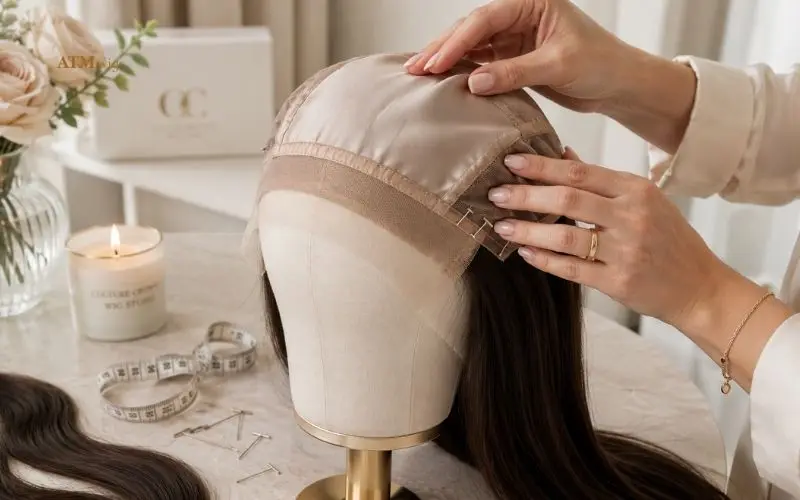
How knots are hidden in a silk top wig
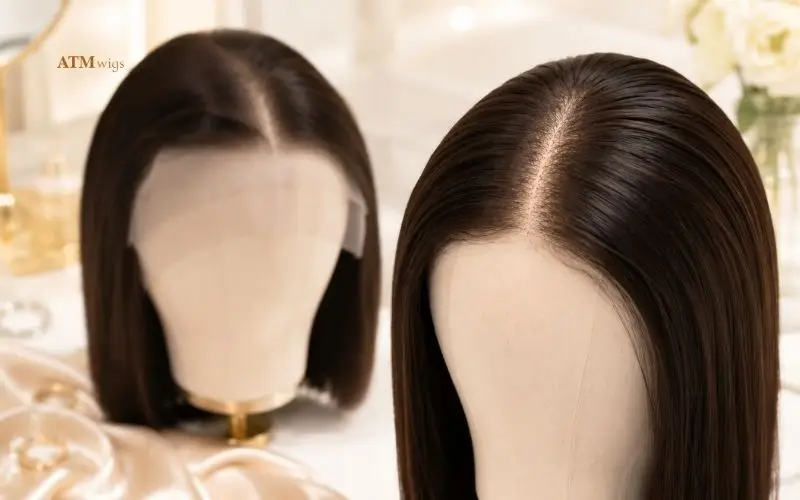
Knot concealment is the biggest advantage of a silk top wig. In lace wigs, knots are tied directly onto the lace, which means they may be visible at the root.
In a silk top wig, the knots are tied into the lower base layer. The hair then passes through the silk layer above, hiding the knots underneath.
This creates the appearance of hair growing from the scalp. It also reduces the need for heavy makeup or concealer along the parting line.
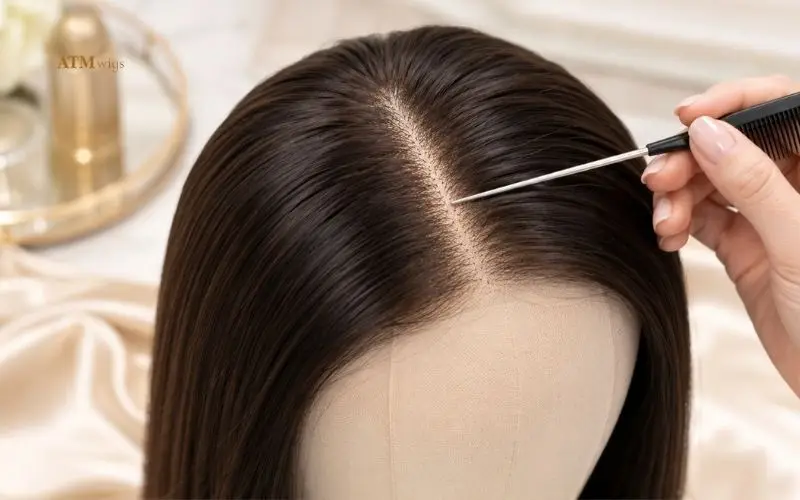
Why hidden knots matter
Knots that are easily visible, especially in darker colours such as brunette, black, chocolatey brown, and even “rooted” colours, can diminish the realistic appearance of a wig. Even if the knots are bleached, under certain lighting it is often possible to see them.
Silk top construction solves this issue through layering. Instead of trying to make knots less visible, the structure hides them.
This is why many wearers choose silk top wigs when they want a premium scalp effect, especially for close-up wear, salon styling, or high-end human hair wig collections.
Why silk top wigs can look more realistic
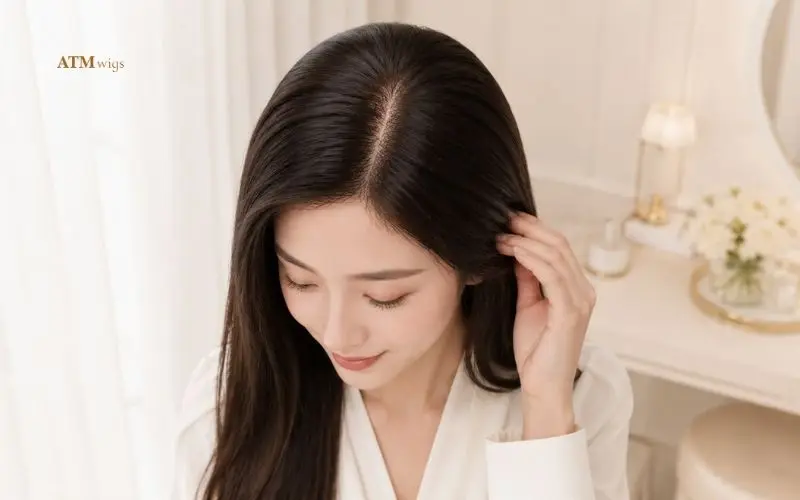
A silk top creates a smoother visual surface than lace or standard monofilament. The parting area looks clean, soft, and scalp-like.
This makes the wig easier to wear confidently without constant adjustment. For many users, the realistic top is the main reason to choose this construction.
However, the silk top must be made correctly. Poor silk alignment, heavy density, or thick layering can reduce the natural effect.
Silk top vs monofilament top: when to choose each
Both silk tops and monofilament tops are designed to provide a natural-looking top to wigs, but they use completely different processes to accomplish this goal:
A silk top wig focuses on hiding knots and creating a smooth scalp illusion. It is a strong choice when realism in the parting area is the top priority.
A monofilament top is usually lighter and more breathable. It allows natural movement and flexible parting, but the base texture may still be visible up close.
You can read more about this by reading our article describing the construct of a monofilament wig, or how to make a monofilament wig. We will also go deeper into comparing the two types of wigs to find out more about their differences.
When to choose a silk top wig
Choose a silk top wig when the wearer wants a highly realistic scalp appearance, hidden knots, and a premium finish.
This construction is especially suitable for human hair wigs where natural movement, realistic parting, and polished styling are important.
It is also a good option for customers who want a refined look without using much makeup on the parting area.
When to choose a monofilament top wig
Monofilament tops should be chosen for wearers looking for breathability, lightweight comfort, and the ability to have flexible partings. Monofilament wigs tend to be more comfortable for day-to-day use in warm climates or for wearers who desire a softer, lighter hat feel.
Both types of wigs can have equal value, therefore; the individual needs of the wearer will determine which is best for their comfort level and their styling habits as well as the degree of scalp realism they desire.

Silk top vs lace top wigs
A lace top wig is usually lighter and more breathable than a silk top wig. It can create a natural effect, especially when the knots are carefully bleached and the lace matches the skin tone.
However, lace construction may still show small knots at the root. This can be more noticeable with darker colors or high-definition close-up viewing.
A silk top wig offers stronger knot concealment because the knots are hidden beneath the silk layer. For readers comparing different cap designs, a guide on silk top vs lace top wigs can help clarify which construction is best for each need.

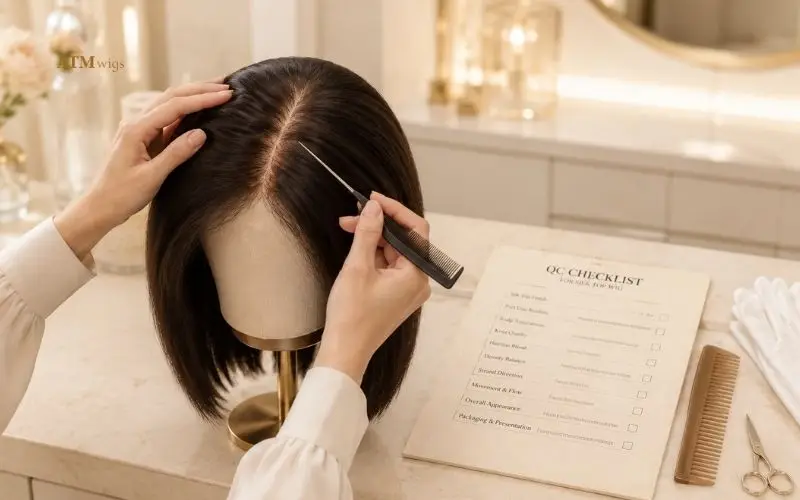
QC checklist for silk top realism
QC (Quality Control) is important when creating a silk top wig. Even if a high-quality hair is being utilized, if the construction is poor quality, it will appear too full, stiff or unnatural.
A professional silk top wig should pass several checks before it is ready for wear or resale.
Part line
The part line should look clean, soft, and natural. It should not be too wide, too dense, or too straight in an artificial way.
The silk color should blend well with the wearer’s scalp tone. A mismatched silk layer can make the parting area stand out.
Knot concealment
The top should not show dark dots or visible knots. The hair should appear to come through the scalp naturally.
This is the main quality point of a silk top wig. If knots are still clearly visible, the construction is not achieving its core purpose.
Bulkiness
The silk top should lie flat against the head. It should not look raised, thick, or padded at the crown.
Bulkiness usually comes from heavy silk, high density, poor layering, or weak cap alignment. A good silk top should feel smooth and refined.
Lace-to-silk transition
If the wig has a lace front, the transition from lace to silk should be subtle. The front hairline should look soft, while the silk top should support the natural parting.
A visible line between the lace and silk can detract from the realism of the wig. This section of the wig must have proper finishing processes and be carefully inspected.
Comfort
The wig cap should fit snugly and comfortably. The silk top section of the wig must not be too rough, stiff, dimpled, or heavy against the scalp.
Comfort is very important for daily wear. Even though the wig is realistic, it must still be long lasting and able to be used for many hours with comfort.
Durability
Correctly ventilated silk top wigs become more secure and stable while brushing, washing and styling them.
A durable silk top wig should maintain its shape and parting effect over time with proper care.
Readers should use the “how are human hair wigs made?” guide for additional information on the production processes of human hair wigs, including the production process below the top of the wig.
Care tips after making or buying a silk top wig
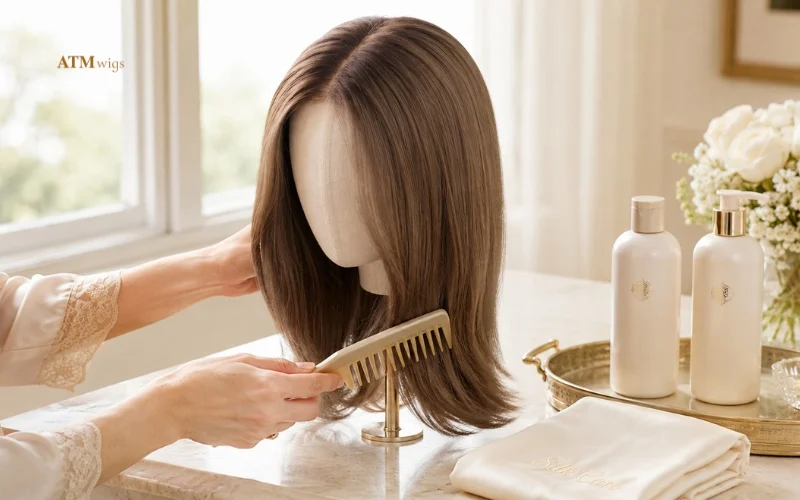
Proper care helps preserve the silk top effect. Use sulfate-free shampoo and conditioner, especially for human hair wigs.
Do not brush aggressively if your silk top wig has a parting area. Pulling on individual strands of hair with excessive force can cause problems with the ventilation and weaken the top of your silk top wig.
Store the wig on a wig stand when not in use. This helps maintain the cap shape, hair direction, and styled finish.
When using heat tools, keep the temperature moderate and avoid pressing hot tools directly onto the silk top or cap structure.
FAQ about how to make a silk top wig
What materials are used to make a silk top wig?
A silk top wig usually uses human hair, a silk or silk-like top layer, a lower base layer, lace or monofilament support, thread, clips, straps, and ventilating tools.
How are knots hidden in a silk top wig?
The knots are tied at the lower base and are then covered with the silk. The hair goes through the silk so it appears to come from the scalp.
Is a silk top wig more natural than a monofilament wig?
A silk top wig often looks more realistic in the parting area because the knots are hidden. Monofilament wigs usually feel lighter and more breathable, although the base can appear more easily seen close-up.
Can a silk top wig feel bulky?
Yes, a silk top can feel bulky if the silk is too thick, the wig is of too much density, or the layers aren’t aligned properly. A high-quality silk top should lie flat and smooth.
Does a silk top wig need bleached knots?
The silk top area usually does not rely on bleached knots because the knots are hidden. However, the lace front may still need careful finishing for the most natural hairline.
Is a silk top wig good for daily wear?
Yes, silk top wig is suitable for every day if the cap provides a good fit, balanced density of hair on the wig, and proper care is taken of the wig.
What should buyers check in a silk top wig?
When purchasing a silk top wig, the consumer should inspect both the part line and knot coverage, as well as the amount of bulk, the transition from lace to silk, and the overall comfort of the wig. Other factors to consider are hair quality and the durability of the cap itself.
Is human hair best for a silk top wig?
Human hair is the preferred option because it looks natural, has a realistic texture and allows for most creative styling options. Premium silk top wigs are usually shown using human hair only.
Understanding how to make a silk top wig shows why silk-layer construction, hidden knots, and careful QC are essential for a realistic scalp effect. To explore premium human hair wig solutions, discover ATM Wigs’ services or catalog for more professional options.

