


Toupees are not meant to cover the entire head, but rather certain areas of thinning or loss. This tutorial describes what toupees are, how they vary from full wigs, who they could be suitable for and the important factors to consider when choosing one.
What are toupees?
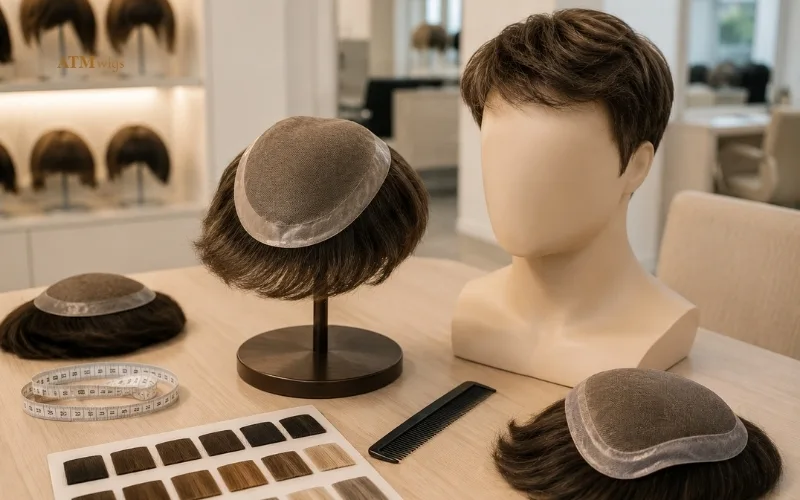
Toupees are partial hairpieces that are designed to cover localized regions of hair loss, usually at the front, top or crown of the head.
A toupee is not a full wig, but rather fills in a bald spot with hair where more coverage is needed. Natural hair around the sides and back usually remains visible and helps complete the finished hairstyle.
A toupee may be made with human hair or synthetic fiber. Human hair is usually chosen for its natural movement, color blending and styling versatility, while synthetic alternatives may provide a more uniform preset look.
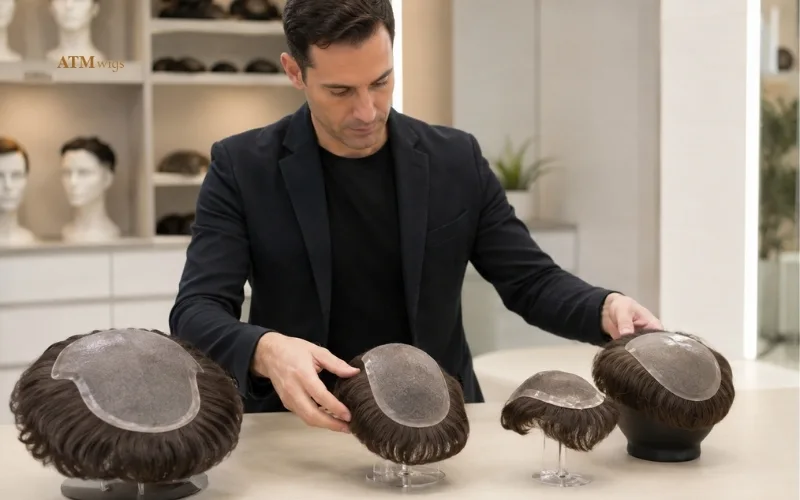
Toupees are available in different sizes, shapes, base constructions, and wearing formats. These variations allow the hairpiece to be selected around the location and extent of the wearer’s hair loss.
The term “toupee” describes the area of coverage rather than one specific construction or attachment method.
How is a toupee different from a full wig?
The main difference is the amount of coverage.
A toupee covers part of the scalp and is normally blended with the wearer’s remaining hair. A full wig covers the entire scalp and does not depend on natural hair around the sides or back.
Toupees are generally considered when hair loss is concentrated around the hairline, top, crown, or another defined area. Full wigs may be more appropriate in cases where thinning is present on most of the scalp, or you want complete coverage.
The best choice relies on the pattern of hair loss, how much hair you have left and what outcome you want.
Other names for toupees
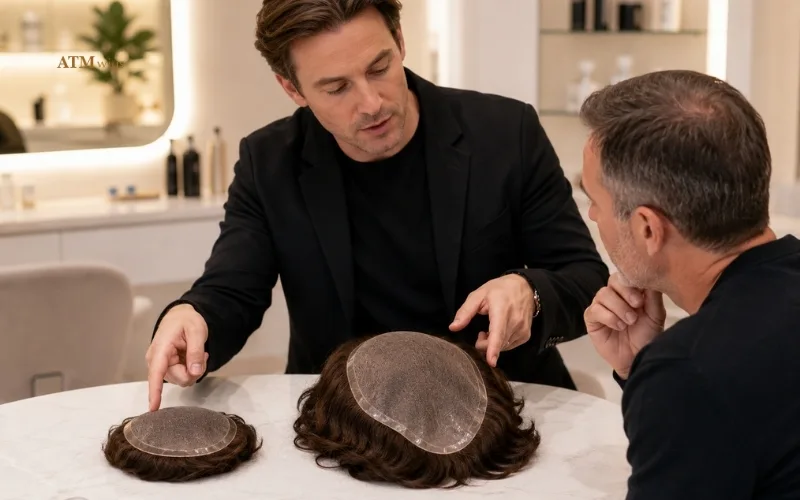
Toupees may also be described as men’s hair systems, hairpieces, partial hair systems, or non-surgical hair replacement systems.
These terms are often used interchangeably, although they do not always mean exactly the same thing. Hair system is a larger phrase. Toupee generally refers to a partial unit for the front, top, or crown.
Learning these terms can help make it easier to compare product descriptions.
Why do people choose toupees?
One of the biggest advantages of a toupee is instant coverage. Once fitted and groomed it can restore the appearance of hair over a region that is difficult to hide by styling alone.
Toupees are reversible, and because they don’t involve surgery, they are a good alternative for anyone who wants to wear a hair replacement solution.
A toupee offers permanent coverage for parts of the scalp that are plainly visible, unlike hair fibers, powders or concealing sprays. Concealing products may work for mild thinning but can become less effective as the hairline recedes or the crown becomes more exposed.
Because a toupee covers only the affected area, the wearer can keep natural hair around the sides and back. The hairpiece can then be cut and blended with the rest of the hair to produce a balanced haircut.
Who may be suitable for a toupee?
Toupees are usually most effective for persons who lose their hair in one or more patches, rather than all over the scalp.
Common examples include:
- A receding hairline
- Thinning across the top
- A visible or bald crown
- Male pattern hair loss affecting specific areas
- Thinning that is difficult to conceal with hair fibers
Remaining hair around the sides and back can help create a natural blend. Its color, density, texture, and direction should be considered when selecting a toupee.
Although toupees are commonly marketed as men’s hair systems, partial hairpieces may also suit other wearers with localized hair loss.
How do toupees work?
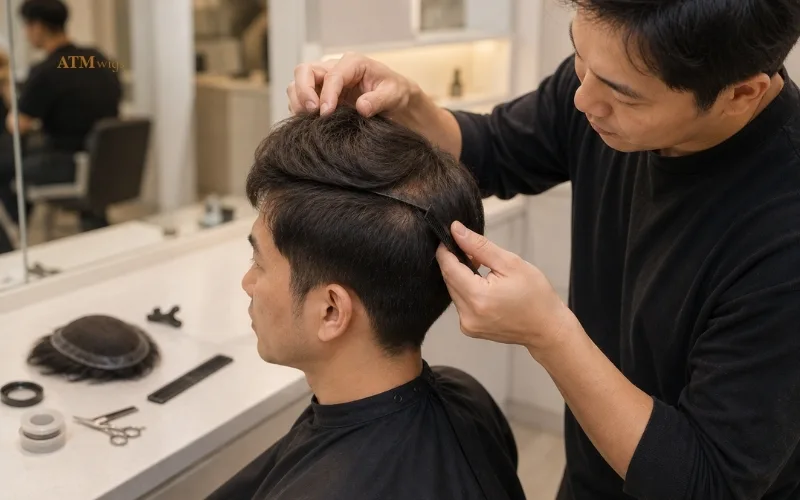
A toupee is positioned over the area that requires coverage and then cut or styled to blend with the wearer’s remaining hair.
It might be secured by clips, tape, liquid adhesive, or some combination of these, depending on the system. Some toupees are taken off every day while others are worn for extended periods between servicing.
The right way to wear it depends on the base design, lifestyle, how long you want to wear it, scalp demands, and maintenance preferences.
Learn more about attachment, blending and wear time in our guide to how toupees work.
What should you consider when choosing a toupee?
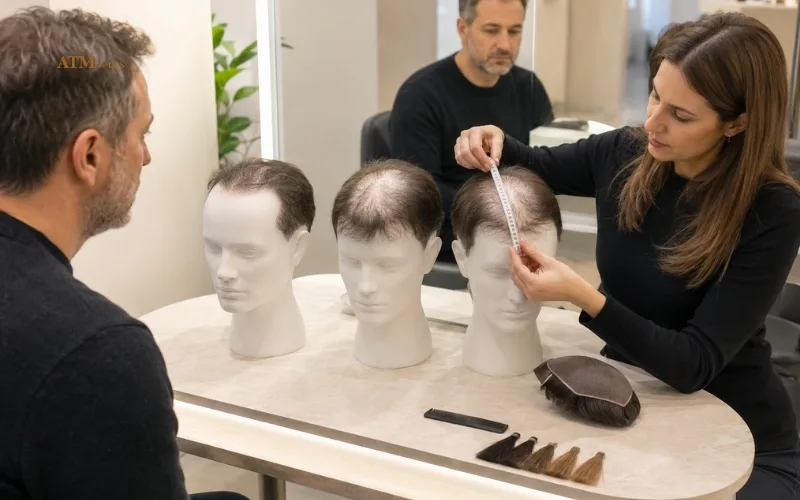
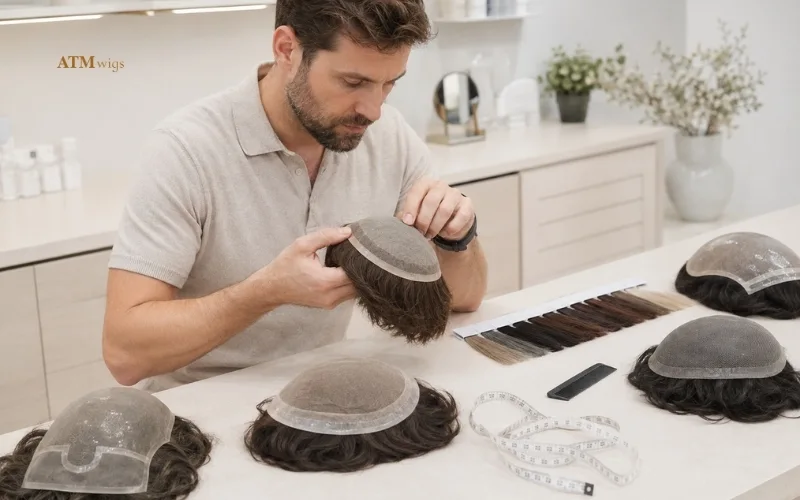
The right toupee should first match the location, size, and shape of the area requiring coverage. Someone with frontal recession may need a different coverage shape from someone with crown thinning.
Color, density, texture, hair direction, and the planned hairstyle should coordinate with the wearer’s remaining hair. A toupee that is noticeably darker, denser, or different in texture may be more difficult to blend naturally.
Hair material is another consideration. Human hair may allow for more natural movement and styling flexibility, although synthetic fiber may be easier to maintain in a pre-set style.
Then the base design and how it is meant to be worn can be evaluated for comfort, attractiveness, lifestyle and maintenance preferences.
Accurate coverage is the starting point. Detailed guides can then help readers compare toupee types, base materials, hair options, color, density, and measurement.
When may a full wig be more suitable?
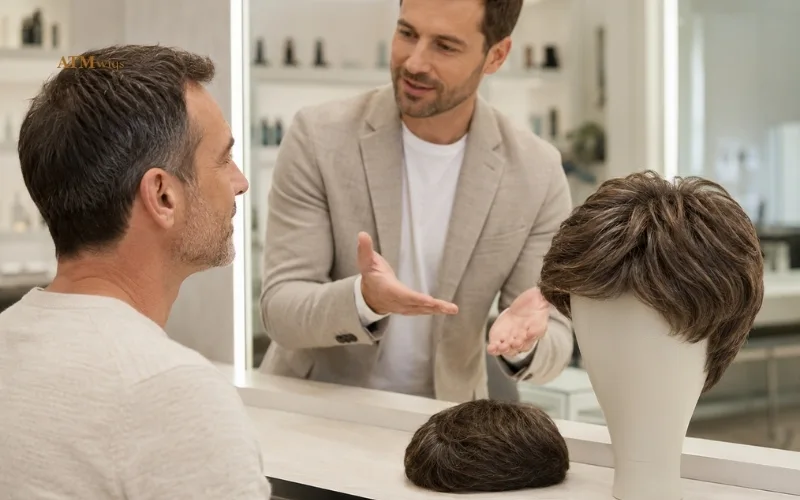
A full wig may be more practical when hair loss affects most or all of the scalp.
It may also suit someone who does not have enough natural hair around the sides and back to blend with a partial hairpiece, or someone who prefers one complete unit.
The choice between a toupee and a full wig should be based on the coverage area, remaining hair, desired hairstyle, and wearing preference.
FAQs about toupees
Are toupees only for men?
Toupees are commonly marketed as men’s hair systems, but partial hairpieces may be suitable for anyone with an appropriate pattern of localized hair loss.
Is a toupee the same as a hair system?
A toupee is a type of partial hair system. “Hair system” is a broader term that may include different coverage sizes, materials, base designs, and wearing methods.
Do toupees look natural?
Toupees can look natural when the size, hairline, color, density, texture, and final cut are matched correctly. Accurate blending is as important as the quality of the hairpiece itself.
Can a toupee cover a receding hairline?
Yes. A toupee can be shaped to cover the frontal area, top, crown, or a combination of these areas, depending on the wearer’s hair-loss pattern.
How does a toupee stay on?
Toupees may be secured with tape, liquid adhesive, clips, or a combination of methods. The appropriate option depends on the base design, desired wearing time, scalp needs, and maintenance preferences.
Toupees are a non-surgical way to hide receding hairlines, thinning crowns and other localized hair loss. Explore ATM Wigs’ human hair toupee inventory and accompanying guidelines to evaluate coverage options, product specs and services for various wearer demands.

