


Not sure what to spray on synthetic wig hair to stop tangles, static, and frizz – without creating buildup? This guide explains the safest spray types by goal, what to avoid, and how to apply them for a clean, natural finish.
Why the “right spray” matters for synthetic wigs
Synthetic fibers don’t behave like human hair. Most products stay on the surface, so the wrong formula can quickly turn into residue that makes tangling worse.
Sprays work best when they reduce friction. Less friction means fewer knots, less matting at the nape, and smoother movement that looks more realistic.
That’s why the “best spray” depends on your goal. Detangling, static control, smoothing, and hold are not the same problem – and shouldn’t be treated with the same product.
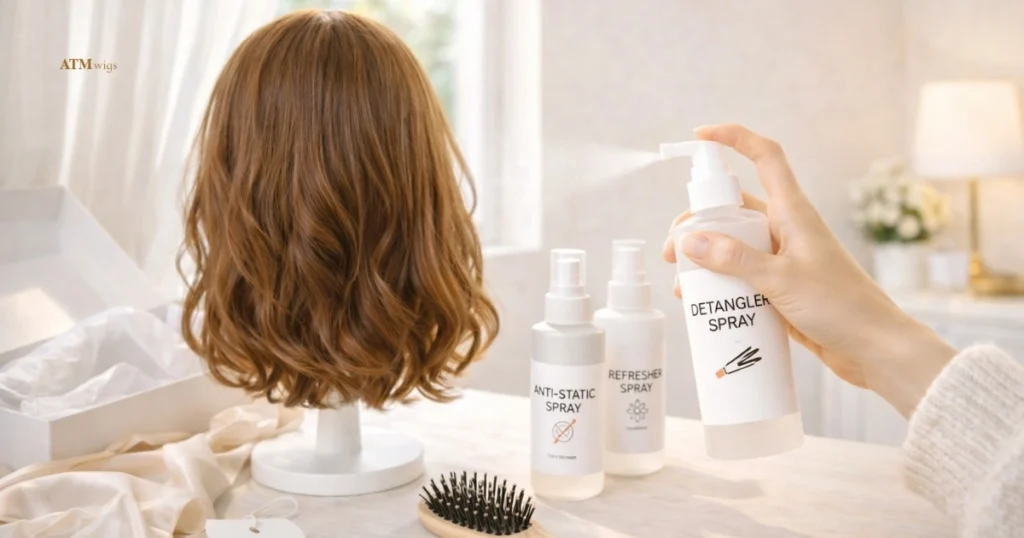
Quick answer: choose your spray by goal
1) Detangle and reduce friction (the #1 need for synthetic)
If you had to pick one category, choose a wig detangling spray made for synthetic fiber. This is the most practical daily fix for tangles, dryness-feel, and rough ends.
Look for a lightweight detangler or conditioning spray that “dries clean.” You want slip and softness, not a greasy coating.
When applying detangling or conditioning spray to your wig, focus on mid-lengths and ends of the wig. Because the nape and tips of your synthetic wig are the areas that experience the greatest amount of friction, these two areas will benefit the most from using your fine mist or conditioning products.
If tangling is your main issue, see how to keep synthetic hair from tangling for prevention habits that make sprays work better.
2) Reduce static and calm the nape area
Static is common in dry weather and with friction from coats, scarves, and synthetic fabrics. A light anti-static spray (mist) helps reduce cling and flyaways without weighing hair down.
Choose a fine mist that feels airy, not sticky. Static control should feel invisible once dry.
Focus on the nape and outer layer. Those areas typically “charge up” first because they rub against clothing.
3) Smooth frizz and make the fiber look “mellower”
Frizz on synthetic wigs is often fiber wear plus friction. A smoothing/conditioning mist for synthetic wigs helps the surface lie flatter so hair looks smoother.
These mists often use lightweight polymers and/or light silicones to reduce friction and improve slip. That’s a good thing – when used lightly.
The goal is a soft, controlled finish. If the product makes the hair feel tacky, it will collect dust and tangle faster.
4) Control shine for a more natural finish
Many synthetic wigs look too shiny under bright light. Instead of adding shine, most wearers want to soften it.
Look for a shine-control or natural-finish spray designed for synthetic fibers. Use sparingly and test first, because some formulas can leave a visible film if overused.
If your wig looks shinier over time, buildup may be the real cause. A clean fiber almost always looks more natural than a coated one.
For a more realistic finish overall, see how to make a synthetic wig look real – spray choice plays a big role in frizz and shine.
5) Freshen between wears (light refresher mist)
If you want odor control, choose a wig refresher spray that’s gentle and fiber-safe. Keep it light and avoid soaking the cap.
A quick mist from a distance plus air drying is usually enough. Heavy fragrance can build up and become noticeable in a bad way.
Use refresher sprays as an “in-between” tool, not a replacement for washing.
The safe spray routine (simple, consistent, effective)
When to spray
Spray is most useful before detangling. That’s when friction is highest and breakage-like fiber fraying can happen.
After washing, a light conditioning mist can help restore slip. You don’t need much – synthetic fibers don’t “drink” product.
If you wear your wig daily, a light detangling mist on ends can be part of your daily refresh. If you wear it occasionally, spray only when needed.
How much to spray (less is better)
Over-spraying is the fastest path to buildup. Buildup makes synthetic wigs feel sticky, look dull, and tangle even more.
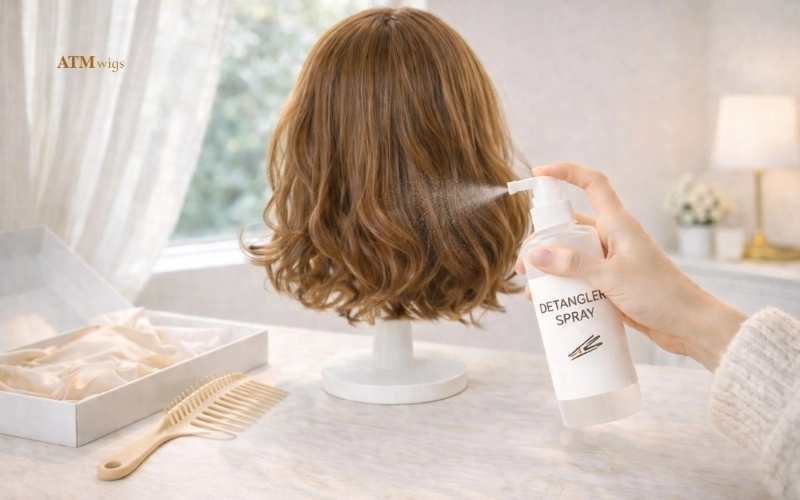
Mist from about 8–12 inches away. Aim for a light cloud over the mid-lengths and ends.
If the hair looks wet or feels damp, you used too much. Let it dry fully before brushing again.
How to detangle after spraying
Hold the hair near the base of the section to reduce tension on the cap. Then start brushing from the ends and work upward.
Use a wide-tooth comb or a wig brush designed for synthetic hair. Small sections and gentle passes beat aggressive brushing every time.
If you hit a knot, add a tiny mist and work it slowly. Forcing it can roughen the fiber surface and increase frizz.
Where NOT to spray
Avoid spraying directly into the cap, lace, knots, or inside seams. Product buildup there is hard to remove and can affect how the wig sits.
Also avoid heavy spraying at the roots or hairline. It can weigh the style down and make the hairline look less natural.
Keep spray targeted to the lengths – especially the nape and ends.
How to shop smart: what to look for on labels
Choose “wig-safe” and “synthetic-friendly”
The simplest filter is wording. Products made for wigs are more likely to be dry-cleaned and avoid ingredients that turn synthetic fibers tacky.
If a product is meant for human hair only, do a small test first. Synthetic fibers can react differently to certain conditioners and styling mists.
When in doubt, choose a wig detangling spray labeled for synthetic hair. That’s the safest baseline.
Alcohol content: why it matters
Sprays with a lot of alcohol can dry out fibers over time. That dryness shows up as roughness, extra frizz, and a wig that tangles faster.
Some quick-dry mists contain small amounts of alcohol and still work fine if used lightly. But as a general rule, alcohol-heavy formulas are risky for frequent use.\
If your wig feels crunchy after spraying, treat that as a warning sign.
Silicone and polymers: good in small doses
Light silicones and polymers can improve slip and smoothing. That’s often exactly what synthetic wigs need.
The problem is a buildup from overuse. If you layer product every day without washing, the fiber can start to feel coated.
A good spray should feel lightweight and dry down clean. If it stays oily or sticky, it’s not the right match.
What NOT to spray on a synthetic wig (to avoid buildup fast)
High-alcohol sprays (especially frequent use)
Alcohol-heavy sprays can make synthetic fibers feel dry and rough, which increases tangling and frizz.
If you need quick-dry, use it sparingly and watch how the fiber feels after a few wears.
Heavy oils and heavy serums
Oils and thick serums often sit on synthetic fibers and attract dust. They can make hair look greasy and cause tangles to form faster.
If you want slip, a wig detangler is usually a cleaner and safer choice than oil.
Creamy leave-in conditioners made for human hair
Many leave-ins are designed to absorb into real hair. On synthetic hair, they can leave residue and make the wig feel sticky.
Sticky fiber is a trap. It collects lint, looks dull, and tangles more aggressively.
Anything that dries tacky or leaves a visible film
Synthetic hair “shows” residue easily. If a spray leaves a film, it will usually become more noticeable with time.
If you see white cast, dull patches, or clumping, stop using it and reset with a wash.

What about hold and styling sprays?
If your goal is hold – for example, controlling flyaways or setting a style – use a wig-friendly styling spray lightly.
This article is about what to spray on synthetic wig hair overall, so we’re keeping hold simple: minimal product, light mist, and avoid layering.
Traditional hairspray can work in a pinch, but it often increases dryness and buildup on synthetic fibers.
For the full breakdown on hairspray (buildup, dryness, and how to remove it), see can you use hairspray on a synthetic wig.
Different wigs, different spray needs
Standard synthetic vs heat-friendly synthetic
Heat-friendly synthetic can tolerate controlled heat, but it still doesn’t love heavy product buildup.
Light detangling spray and anti-static mist are usually enough. If you heat-style, avoid spraying right before using tools.
Let the product fully dry, keep the heat controlled, and don’t “stack” sprays.
Curly vs straight synthetic wigs
Curly wigs need curl-preserving habits. Too much detangler can sometimes cause curl clumping or loosen definition.
Use a very light mist, then finger-detangle or use a wide-tooth comb sparingly.
Straight wigs usually benefit from slip at the ends and extra attention at the nape.
Long lengths and the nape problem
Long synthetic wigs tangle more because they experience more friction – especially where they hit clothing.
Target the nape and ends with a light detangling spray. Even a small daily routine can make a big difference in wear time.
If your wig only tangles at the nape, friction is the true cause. Spray helps, but reducing friction is the long-term fix.

How to test a spray safely before committing
Do a small strand test
Choose a small underside section. Spray lightly, let it dry, then feel the fiber.
A good spray should dry smooth and light. Watch for stiffness, stickiness, cloudiness, or extra frizz.
If the section tangles more easily after drying, the product is not a match.
Check again after 24 hours
Some sprays feel great at first and then turn tacky later. After a day, see if the wig collects lint faster or feels coated.
If you notice faster tangling, reset the wig and switch to a lighter, wig-specific detangler.
Reset if it goes wrong (briefly)
Wash the wig with a wig-safe shampoo, rinse well, and air dry. Then restart with less product.
Avoid layering multiple sprays. One good detangler plus an anti-static mist (as needed) is enough for most wearers.
If you need step-by-step washing help, see how to wash a synthetic wig and how to wash synthetic wig without wig shampoo.

FAQ: What to spray on a synthetic wig
Can I use regular leave-in conditioner on a synthetic wig?
Usually no. Many leave-ins are made for human hair and can leave residue on synthetic fibers, leading to sticky tangles and dullness.
Is silicone spray safe for synthetic wigs?
Light silicone-based detanglers can be helpful for slip. The key is using a small amount and washing regularly to prevent buildup.
What can I spray on a synthetic wig to stop frizz?
A lightweight smoothing or conditioning mist made for synthetic hair works best. Avoid heavy oils and thick creams.
What should I spray on a synthetic wig for tangles?
A wig detangling spray labeled for synthetic fiber is the most reliable option. Focus on the nape and ends before brushing.
What’s best for static on a synthetic wig?
An anti-static wig spray in a light mist format. Use it as needed, especially in dry weather and around the nape.
Should I use shine spray on synthetic hair?
Shine sprays can make synthetic hair look more glossy. If you want a natural look, choose shine-control or natural-finish sprays instead.
Can I spray a synthetic wig while wearing it?
Yes, but mist lightly and avoid the face and hairline. It’s better to spray the lengths and ends, then gently brush.
My wig feels sticky after spraying – what do I do?
Wash to remove residue, let it fully dry, and restart with less product. Sticky fiber usually means too much spray or the wrong formula.
How often should I spray a synthetic wig?
Lightly as needed – mainly before detangling and after washing. Daily heavy spraying can cause buildup.
Once you understand what to spray on synthetic wig hair – detangler for slip, anti-static mist for cling, and lightweight smoothing spray for frizz – you can keep your wig softer, neater, and more natural-looking with less effort. If you’re exploring professional-quality hair solutions, visit ATM Wigs to browse our catalog and discover services designed to support confident, beautiful results.

